Paving Driveways Dublin
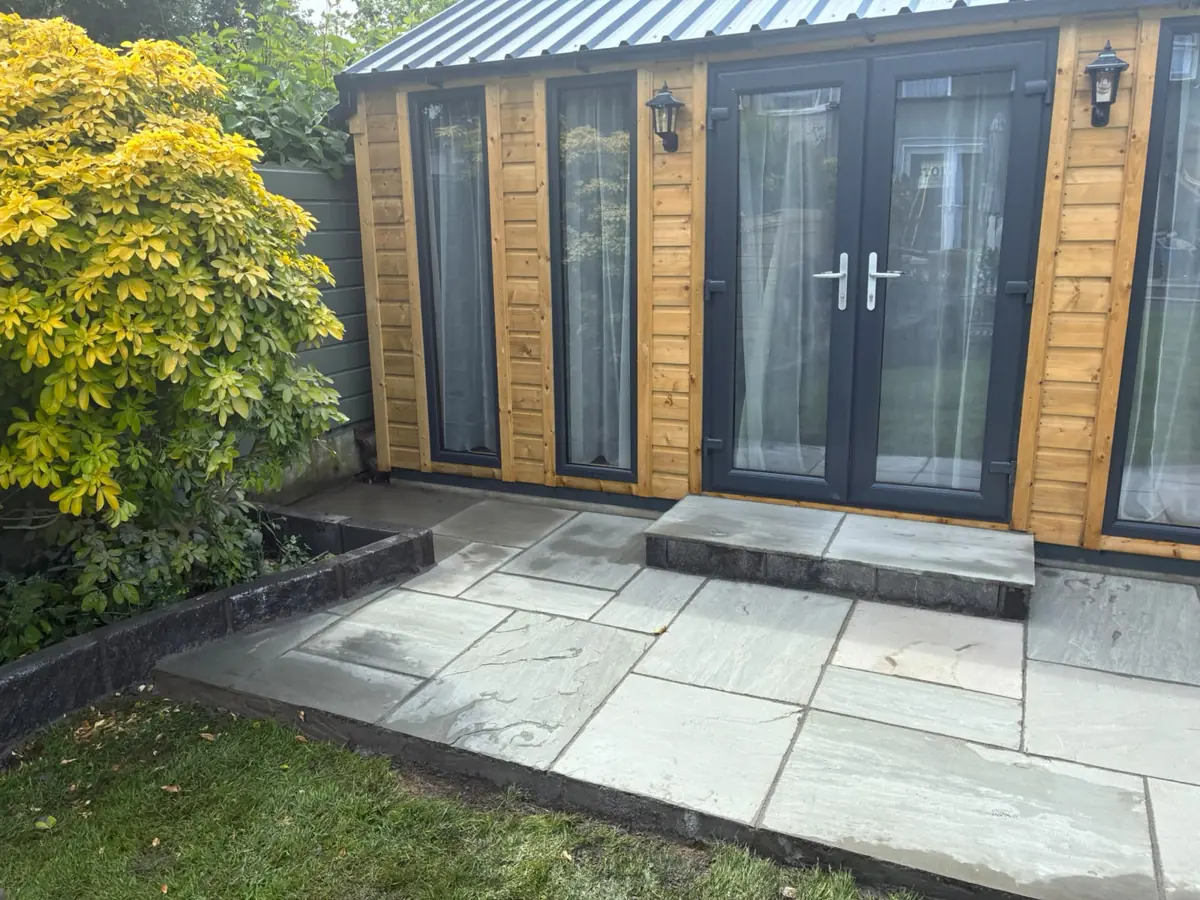
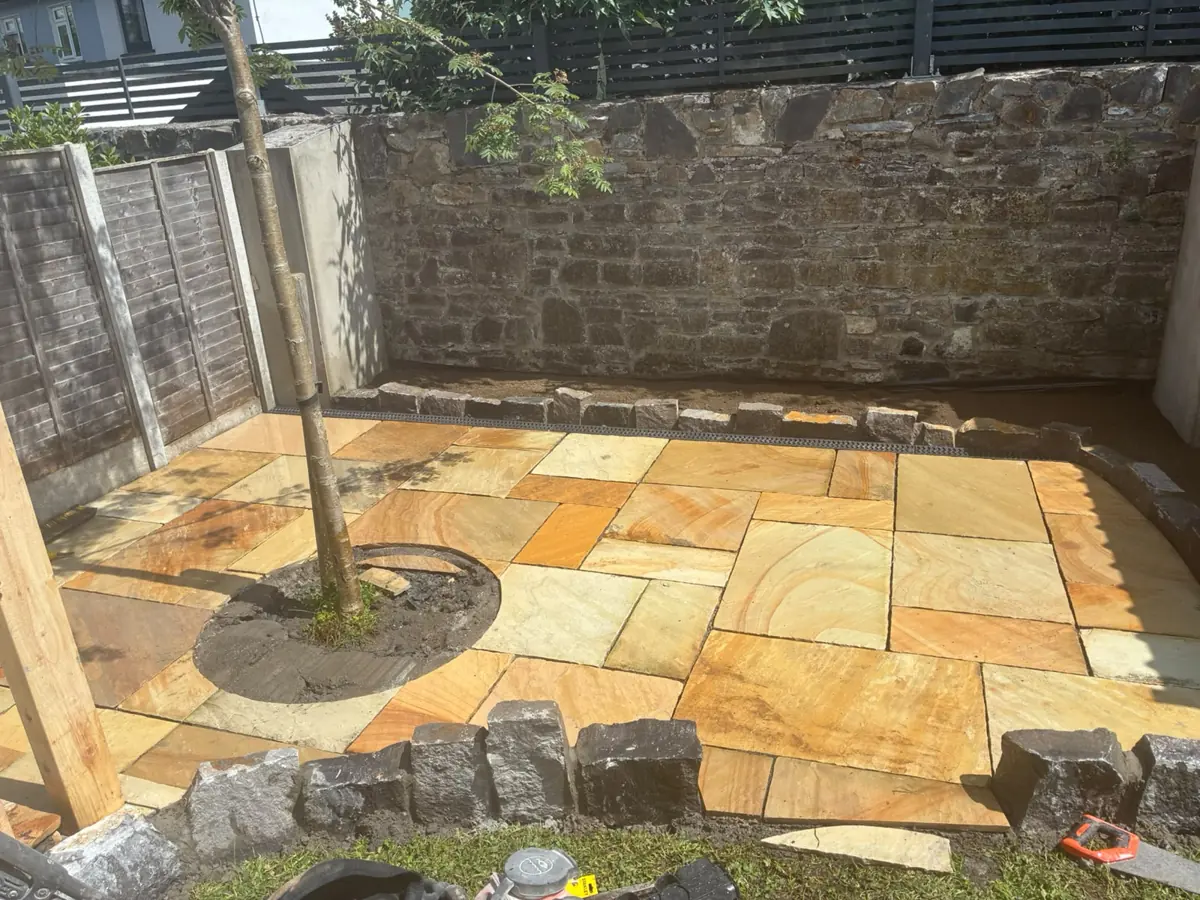
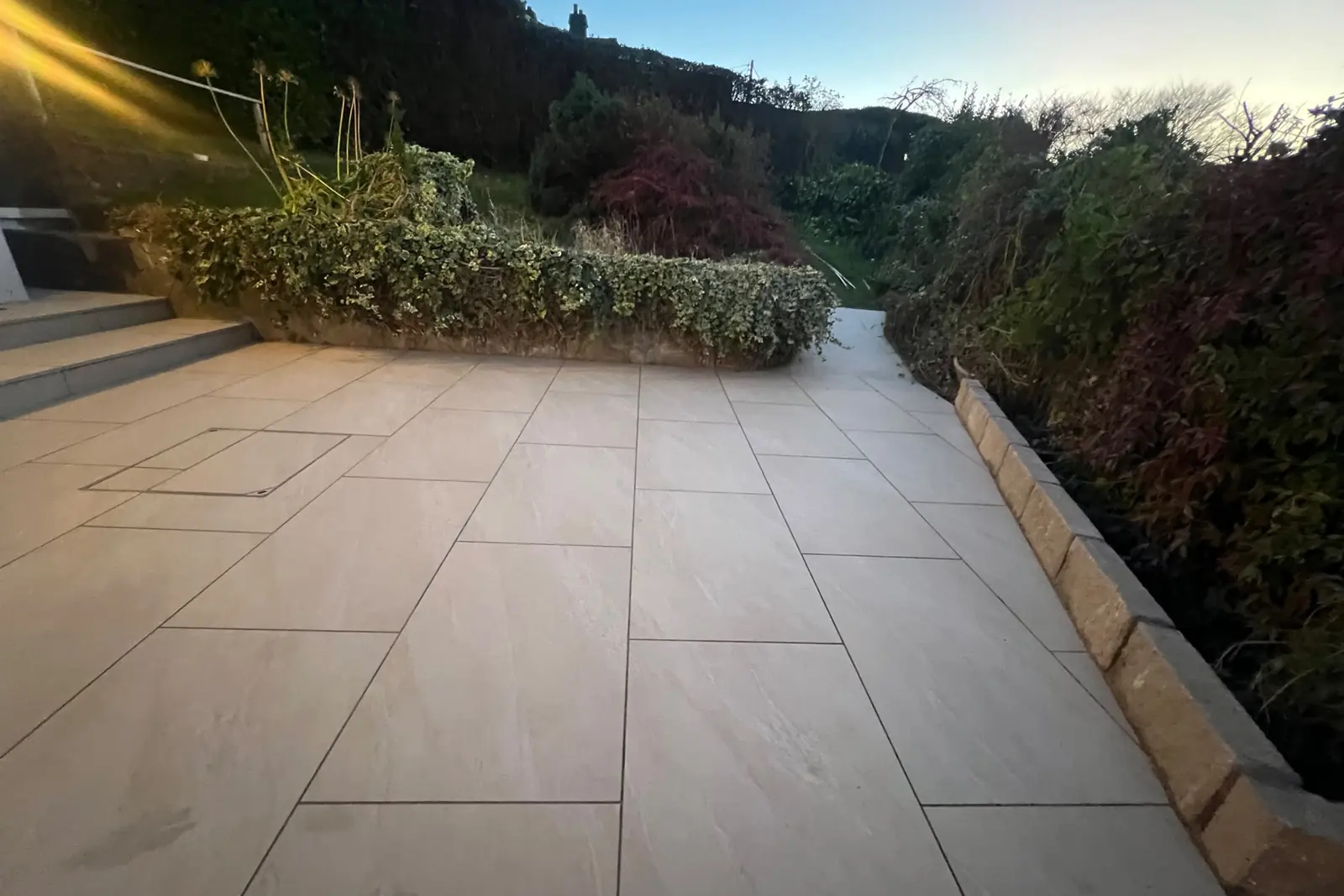
New patio laid by Paving Driveways Dublin
Serving Naas, Co. Kildare

Patios in Naas

Porcelain, granite and limestone patios for gardens in Naas, laid on a solid base with a gentle fall away from the house.

Get a FREE Quote

Fill in the form and we’ll get back to you shortly.

Step 1 of 2

  • 30+ Years' Experience30+ Years
  • Fully InsuredFully Insured
  • FREE Site VisitsFREE Visits
  • 5-Year Patio Warranty5-Year Warranty
  • No Deposit TakenNo Deposit
Patio Paving

New Patios in Naas

A patio in Naas starts with a conversation about the garden. Where will you eat outside? Where does the sun land late in the day? And what is the easiest way out from the back door? Those answers set the layout, and the size, shape and levels are agreed with you before work begins.

You can see the stone for yourself at the FREE design visit, where porcelain, granite and limestone samples are laid out in your Naas garden. Porcelain is uniform and very easy to clean, granite is hard-wearing with a fine speckle, and limestone shows the soft blue-grey colour familiar from Irish gardens.

Matching steps and edge pieces finish the patio cleanly where you step down from the house, in porcelain, granite or limestone to suit.

The ground is dug out and a compacted base laid, and every slab is fully bedded so there are no hollow spots underneath. The patio falls gently away from the house so rain drains off, and its installation carries a 5-year warranty.
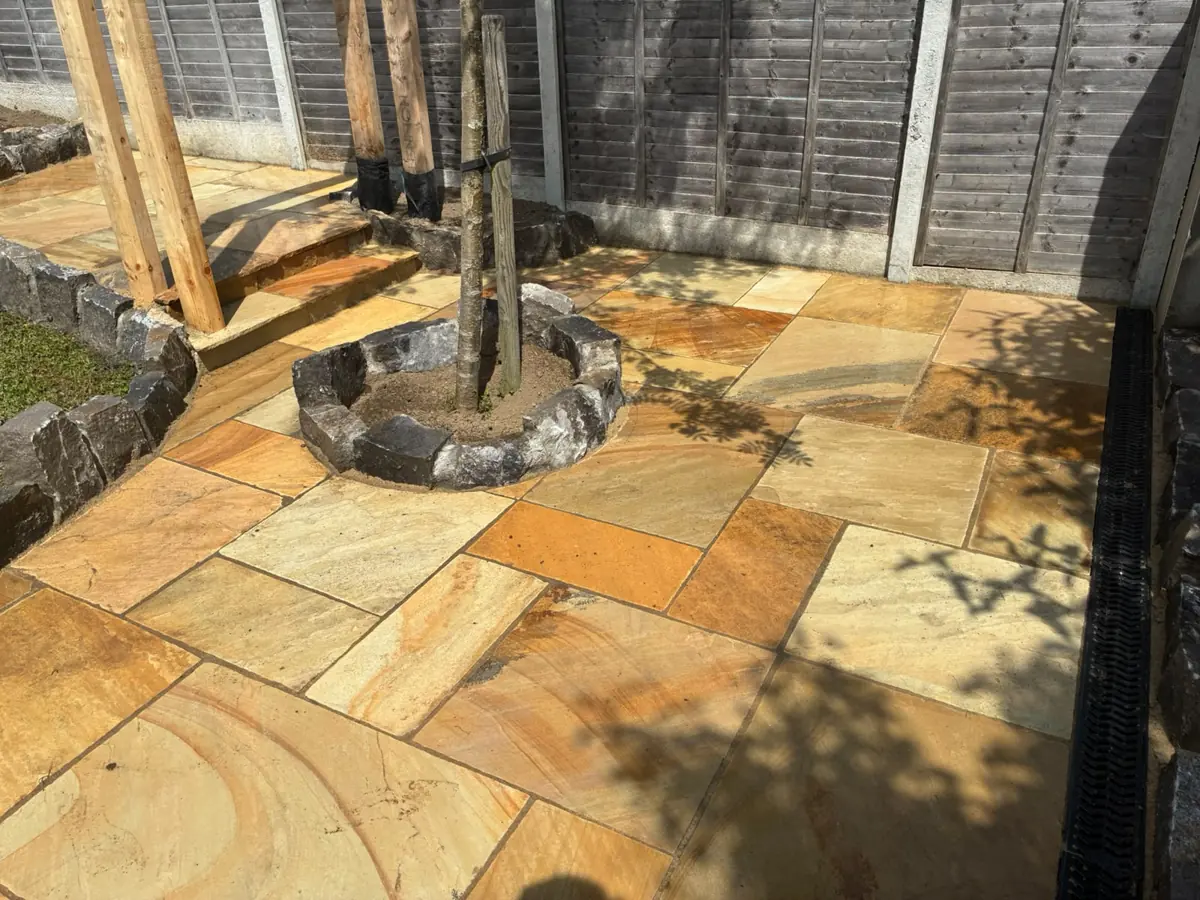
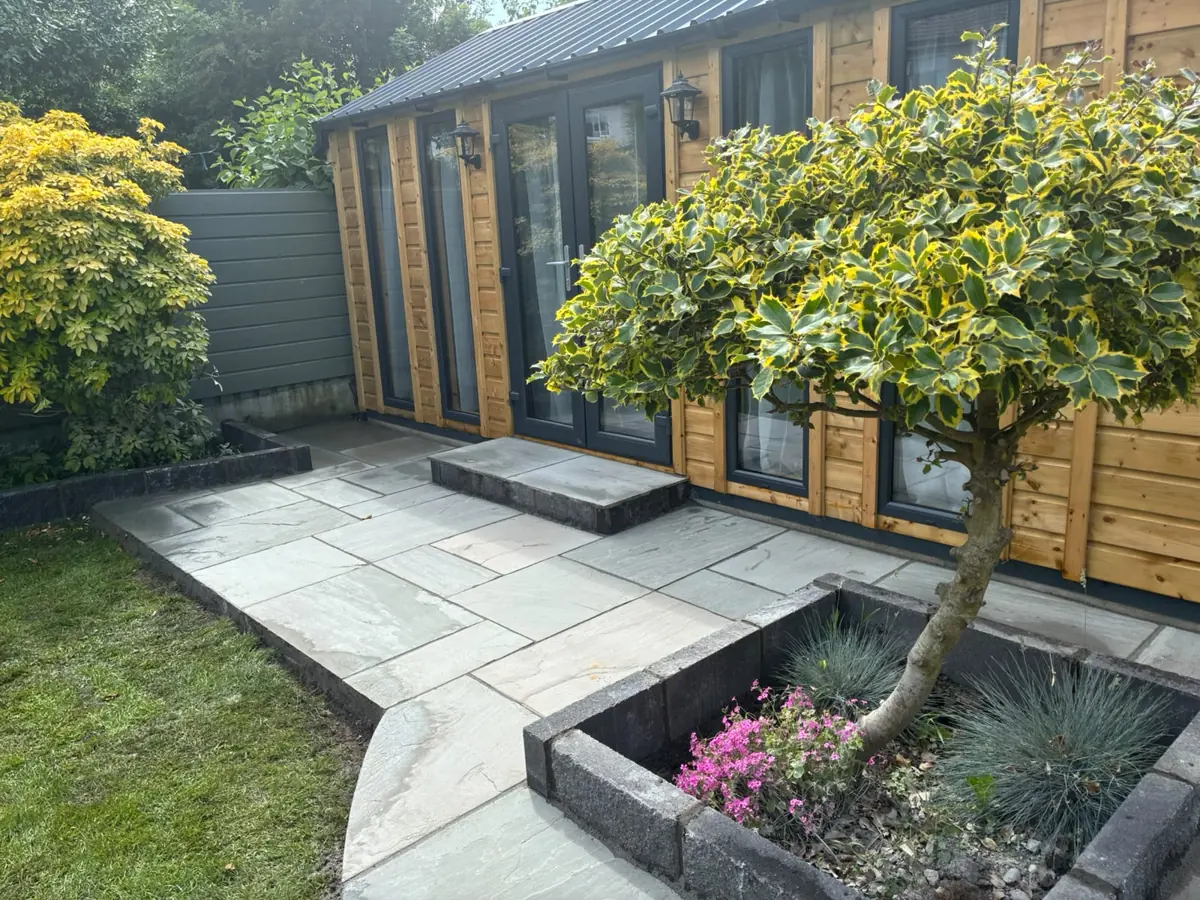
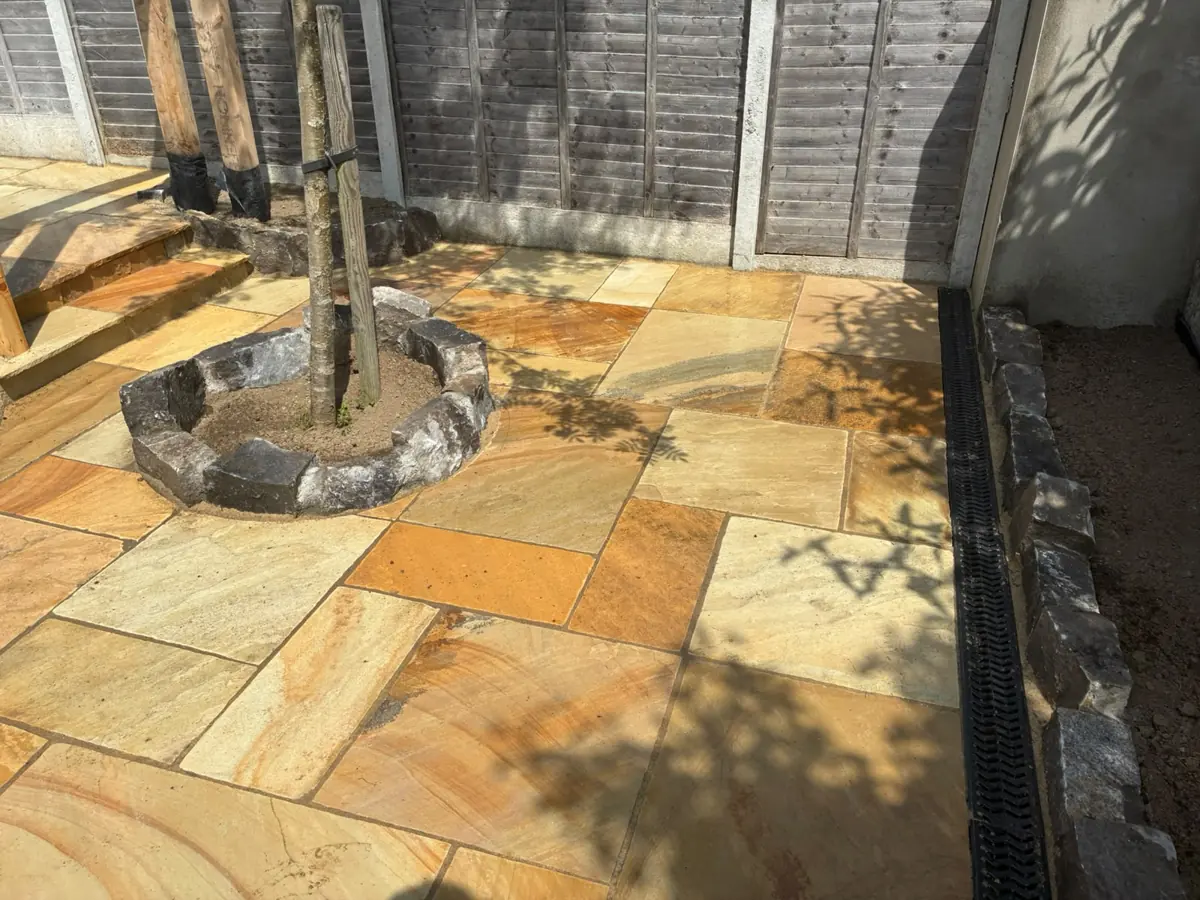
New patio laid by Paving Driveways Dublin, photo 1
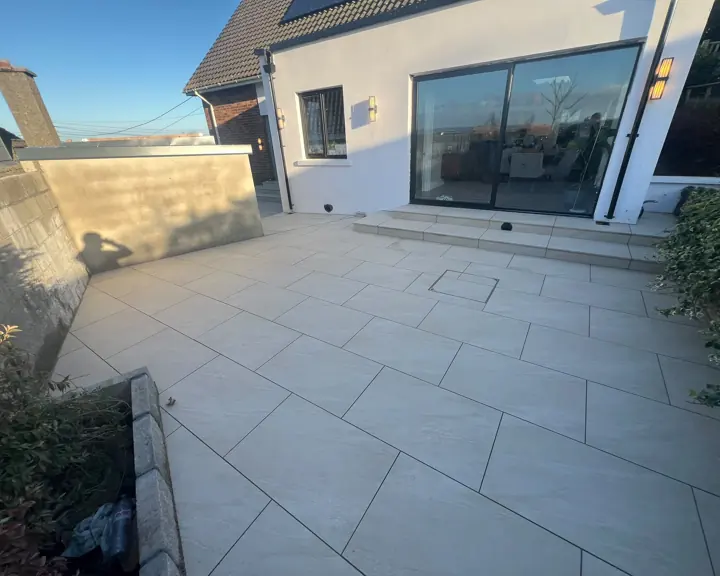
New patio laid by Paving Driveways Dublin, photo 2
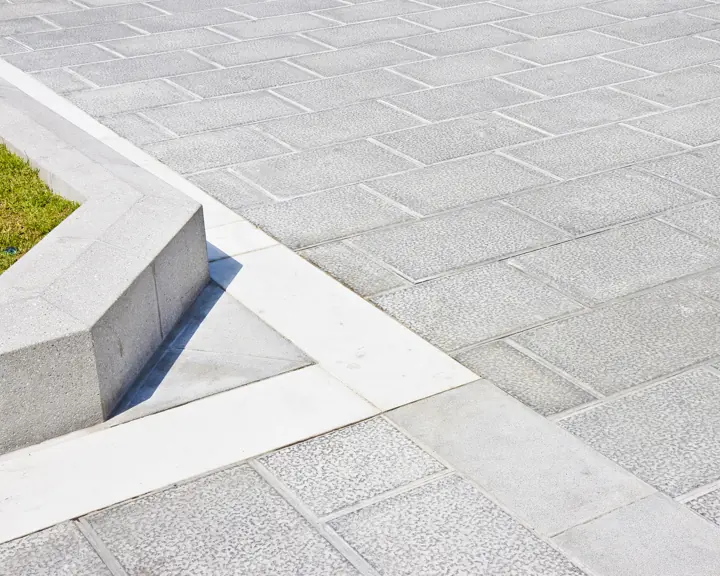
New patio laid by Paving Driveways Dublin, photo 3
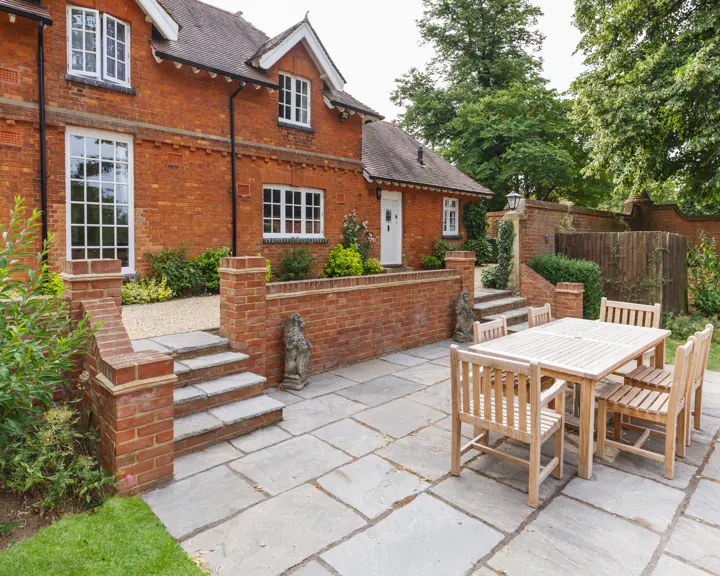
New patio laid by Paving Driveways Dublin, finished work
What’s Included

What a New Patio Includes

  • A FREE design visit including stone samples
  • Layout designed around your garden and the sunshine
  • Ground excavated and a firm base compacted
  • A slight fall taking water away from the house
  • Slabs laid, cut and their joints pointed
  • A 5-year warranty on the installation itself
Why Choose Us

Why Choose Us in Naas

Customer Reviews

What Our Customers Say

Get a FREE Quote in Naas

Book a FREE design visit in Naas and see the stone choices laid out in your own garden.

Our Work

New Patios We Have Laid

Our SuppliersThe Materials We Lay

  • Tobermore
  • Kilsaran
  • Roadstone
  • Allstone
  • Barleystone Paving
  • Vuba
How It Works

How a New Patio Is Built

  1. Plan the Layout

    The garden is measured, and the patio's size, shape and levels are agreed with you, with stone samples on hand.

  2. Dig Out

    Grass or old paving is cleared and the ground dug out so there is room for a solid base.

  3. Base & Falls

    The base is firmly compacted and shaped to a gentle fall away from your house.

  4. Lay & Point

    Slabs are laid to the layout and cut to fit, then every joint is pointed.

  5. Final Check Together

    You review the finished patio with us and confirm all the work has been carried out as agreed.

Swipe to See More

FAQs

Patios FAQs for Naas

Do You Lay Patios in Naas?

Yes. Naas in Co. Kildare is about 40 km from our base in Swords, and we lay patios there and across Sallins, Kill, Clane and Kilcullen. Call 1800 938 832 with your Eircode to arrange a FREE site visit. The business is fully insured for every job.

How Do I Get a Price for Patios in Naas?

Call 1800 938 832 or send the form, adding your Eircode. We arrange a FREE site visit in Naas, look at the work involved and give you a clear price that has no small print. There is no obligation to go ahead, and no deposit is asked for if you do.

Which Patio Stone Is Best for an Irish Garden?

With a good base under them, porcelain, granite and limestone all deal well with Irish weather. Go for porcelain if low-effort cleaning is the goal, granite for the toughest surface, or limestone for a classic blue-grey patio. The samples travel to your garden, so you can judge them in your own light.

Will a Porcelain Patio Be Slippery in the Rain?

Porcelain sold for gardens has a textured face to give grip in the rain. Its slip rating uses an R scale, and R11 is the level most suppliers treat as the minimum outdoors; outdoor slabs tend to be 20mm thick. Bring your hand to the samples at the visit and feel the finish for yourself.

How Big Should My Patio Be?

Think about the table and chairs you'll use, then add a margin so people can walk round them and push chairs back. At the visit the outline is marked on the ground with you, so you can stand inside it and judge the size before digging.

What Affects the Cost of a New Patio?

Area is the main driver, along with the stone, the depth of excavation and base your ground calls for, and any steps or edge pieces. Porcelain is very hard to cut, so it takes more labour. The FREE site visit gives you a clear price, and you pay on completion, not up front.

Can the Patio Be Level With My Back Door?

It finishes slightly below the threshold, not level with it, and falls gently away from the house. Rain then flows off the patio into the garden instead of gathering at the back door. The levels are worked out with you at the visit.

How Much Fall Should a Patio Have?

A widely quoted figure is 1:60, which means about 17mm of drop per metre, running away from the house. Some porcelain suppliers advise a lighter 1 in 80. On your patio the fall, and where the water goes, is agreed with you during the visit.

Can You Lay a Patio Over My Old Slabs?

No. The old slabs and their bed are dug up so the new patio isn't sitting on old faults. It is then laid on a newly excavated, compacted base, which gives the new stone a firm and even footing from the start.

Does a New Patio Need Sealing?

Porcelain doesn't, because nothing soaks into it. Granite stays looking well with sweeping and a wash every so often. Sealing limestone is a choice rather than a must: it makes marks easier to lift, and the options are explained when you pick your stone.

Is There a Warranty on a New Patio?

Yes. Every new patio installation has a 5-year warranty, and the slabs carry the manufacturer's warranty as well. You pay when the patio is finished, with no deposit taken, although a larger project may be split into stage payments.

How Can I Tell a Patio Has Been Laid Well?

Look for slabs that feel firm with no rocking, and a surface that is clear of puddles after rain. Next to each other, slabs should be within about 2mm of level, the joints should be filled evenly, and the paving should be 150mm or more below the damp proof course except at doorways, with no air bricks covered.

Can’t Find the Answer You’re Looking For?

Get in touch with us today.

Call 1800 938 832Get a FREE Quote